Sunday, August 11, 2013

Summer Reading - Walden

Sources: 1, 2, 3, 4

Dear Mr. Thoreau,

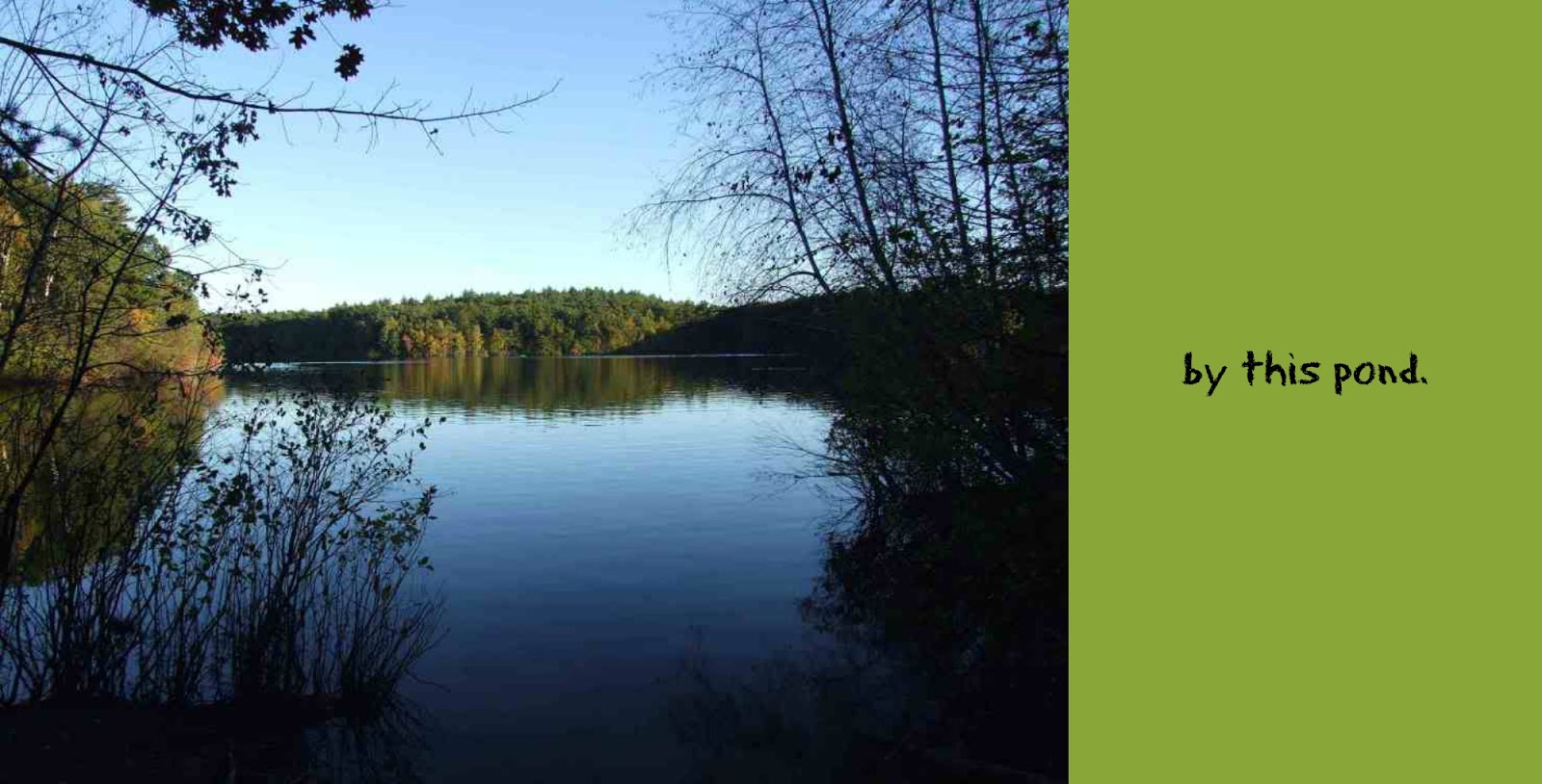
I recently read your book Walden and wanted to thank you for sharing your experiences with us. Did you know that you would inspire millions of readers to want to re-create your experiment and build their own cabins to live in? There is just something so appealing about the simplicity of your life on Walden Pond.

Your cabin is perfect. I love the the small, but workable size; the windows on both sides to let light in all day long; the wood shingles covering the outside; and the pretty fireplace at the end. I must commend your great eye for purity of design.

I was looking over your furniture list (in your chapter on Economy) and may I be so bold as to make a few suggestions.  The three chairs would indicate that you could easily and happily entertain two guests, but you only have one cup and two forks and knives.  You need to have a set of three of all your dishes and cutlery. I know you don't drink tea or coffee, but do your guests not want at least some water or cider? You did mention that you rarely feed your guests or give them something to drink, but it just seems the hospitable thing to do especially since your guests will have walked at least a mile to visit you. I would urge you to be more generous in this regard.

You mention the solitude you experienced in your cabin, but I hate to break it to you that being one mile from town is not really that remote. Let's be honest a mile is a nice saunter, a daily constitutional, not a long bush-whacking hike into the deepest darkest forest. Also the fact that you are able to have your mother do your laundry and you could join your friends for dinner just points out how not remote you really were. And between you and me, I think you should do your own laundry. It's really not that hard.

Your chapter on clothing really got me thinking.  You mentioned that you like to wear comfortable, worn, drab clay coloured clothing and even things that are patched.  It seems that this is more something a man would write than a woman (or at least this woman).  True, in the woods having old, comfortable clothes feels just right so you don't worry about getting your outfit dirty or ruined in any way.  However, as soon as I have to mingle with other people in an urban setting then I no longer feel comfortable wearing old and worn clothing. In order to not feel self-conscious about my appearance and thus relax and enjoy interacting with other people I need to be wearing something that is comfortable, flattering, and classically stylish. I think it is a mark of maturity to know what to wear in different situations so your clothing suits the occasion. 

While I thoroughly (see what I did there - I crack myself up) enjoyed reading your book, I do think you go on about things too much.  Take the first eleven pages - I had to skip read them as they were just too dull. I totally agree that simplicity in living is a good thing and reading to educate yourself throughout your life is a worthwhile endeavor yadda yadda yadda, but do you need pages to tell us about it? I think you should practice writing a little more succinctly. Maybe more of your time at the cabin could have been spent editing your written work. I hope I didn't offend you with that. I'm just being honest and you seem the type to appreciate that.

While I had to skip read the parts where you rant about things, I loved your descriptions of life on the pond, building the cabin, and observations about the seasons. In fact, I think you should expand these sections of the book. To help you out I made a list of some topics you might consider including in the book. What about discussing how you spent your days at different times of the year (you did mention during bean-growing time and a summer morning, but what about during the winter).  Also more details on what you ate would have been really interesting. I was fascinated about your rye and Indian corn bread and would have loved more details on how you made it. I also enjoyed reading your description of winter on the pond with your observations about ice and your notes about the first signs of spring. I bet you didn't realize how important those records would be to scientists years later studying climate change. Good for you for being so thorough (hardy har har). I would love you to include chapters on your observations of life at Walden Pond during summer and autumn too. I bet the pond is beautiful in the fall.

I hope my suggestions are helpful. I did find the book inspiring and have been dreaming of how I would make a cabin in the woods for my husband and myself. Since there are two of us, our cabin has to be a little larger so I'm working on refining your ideas and possibly adding a sleeping loft. I'll let you know when I have pulled my ideas together.

Yours truly,


Linked to Literary Friday at Art @ Home

Monday, August 5, 2013

Summer Reading - The Great Gatsby

I recently read The Great Gatsby (by F. Scott Fitzgerald).  I feel like I have joined the ranks of the well-read now having completed one of the great American novels.

I'm glad I read the novel, but I can't say I loved it. W
atching the Crash Courses (that I have posted links to at the end of the post) actually helped me understand and appreciate The Great Gatsby a lot more.  

I thought F. Scott Fitzgerald was wonderful at describing the setting of the novel - everything from the parties at the mansions on Long Island, to the desolate smoke and dirt in the valley of ashes, to the smoldering heat of summer in Manhattan.  By the way, I have always wondered what New York City was like before air conditioning during a heat wave and now I know - yikes!

I enjoyed reading all the details about the Jazz era - everything from the houses, and parties, to the cars, and the details of life back then. The 1920s were a glamorous age and it was fun to picture what everything would have looked like.  

I haven't seen the movie yet, but I did a collage of some of the things I imagined while I was reading the novel, like I did for the previous two books I reviewed (here and here).

Sources: 1, 2, 3, 4

If you really want to understand the Great Gatsby and its significance you should watch the Crash Courses that I have linked to below.  It helps you understand:
  • how The Great Gatsby is a novel about the American dream 
  • the importance of the colours gold, yellow, and green in the novel
  • how the characters are obsessed with changing time in the novel


Have you read The Great Gatsby?  Did you like it?  The characters are interesting, but not very likable which can be a problem in liking the novel.


Friday, August 2, 2013

Summer Reading - The Garlic Ballads

I finished reading The Garlic Ballads (by Mo Yan) a few days ago and I'm here to tell you not to read it. It may have won a Nobel Prize for Literature in 2012, but it was such a bleak and depressing and yes, brutal, view of China that I didn't like it. 

When I first started reading the book I thought it must be set back in some ancient dynasty as life was very primitive with most of the farming being done by hand and the peasants being terrorized by the people in authority.  I was surprised to find out that the book was set in 1987.  The Garlic Ballads is based on a true story about an uprising by the farmers in Gaomi Township in Northeast China.  Although the government encouraged the farmers to plant garlic there ended up being a glut on the market resulting in the government not buying the garlic and the farmers rioting.


Although The Garlic Ballads was well written and the story was interesting, it was just too brutal. Is China really that brutal?  I have no idea, but I can't imagine there isn't kindness and love within families or between neighbours. I wasn't surprised that the officials and the police and the jail wardens were aggressive and brutal, but the villagers and family were fighting and mean to each other as well.  

Like I mentioned in my review of The Help, the book needs to have hope for it to be enjoyable for me.  I read A Fine Balance by Rohinton Mistry and I felt the same way I did about The Garlic Ballads.  I ended both books upset that they were just endless retelling of lives full of misery.  


So, while I can't recommend that you read this book, I did find it interesting to read about the homes in Northeast China.  I did some hunting on the internet and have become a recent expert in kang beds.  I've pulled together some visuals to illustrate what I think some of the images (the more pleasant ones anyway) from The Garlic Ballads looked like:


Sources: 1, 2, 3, 4, 5, 6, 7

So what do you think? Can you read difficult books, books that are depressing or brutal?  Or do you need a little hope and kindness in the lives of the main characters in the stories you read?

Linked to Literary Friday at Art @ Home

Tuesday, July 30, 2013

Summer Reading - The Help

I just finished reading The Help (by Kathryn Stockett).  I know, I know, I'm pretty much the last person to read the book, but better late than never.  I really enjoyed it and kept drifting over to read parts of it during the day.  I kept wondering what was going to happen next and found myself thinking about it as I went about my day. I haven't been hooked by a book, like I was with this one, in a long time.  

I love a story that attempts to accurately portray a specific time period like The Help did. I like to learn something about another time and place and what life was like for people living then. I especially liked that even though this was a difficult time for the black maids, they were not left without hope that things would improve for them at the end of the story. I'm sentimental enough to need to have some positive outcomes at the end of a story or I'm left feeling upset and sad.

One of the things I liked about The Help was that it was set in Mississippi. I have always been intrigued by life in the Southern US - it seems so different to life here in Canada. We aren't raised to say "yes ma'am" and "no ma'am" and have impeccable manners and we don't cook black-eyed peas on New Year's Day and have magnolia trees and cotton farms and ... I could go on and on.  Not only was the location intriguing, but I have always loved the fashion from the early 1960s so I spent the book imagining what they were wearing and how the cars and houses looked. It will be interesting to see how someone else portrays it in the movie.  

I've actually finished three books so far this summer and they couldn't be more different from each other. I thought it would be fun to find some photos to capture what I was imagining for each of the books. Although two of the three books have recently been made into movies, I haven't seen the movies yet so these are just the inner workings of my mind (scary, I know).  

So here are some of the images that struck me as I read The Help:

Sources: 1, 2, 3, 4, 5, 6, 7, 8, 9, 10    

I'd give The Help a 9/10 and a must-read recommendation.  My only complaint was not finding out about Cecilia Foote's back story - I kept thinking it was going to be significant and maybe even had to do with Constantine's departure (if you get my meaning without revealing anything in case you haven't read the book).

Now I need to get my hands on the movie so I can see how the book has been interpreted. Have you read the book or seen the movie? What did you think? 

P.S.  For an interesting article about filming the movie and the set designs read here.


Linked to Literary Friday at Art @ Home

Friday, July 26, 2013

Larb from Laos


We have been traveling at a break-neck pace through Asia these past few months and I now have food from Laos to share with you.  

We opted to make Larb, a spicy mixture of marinated meat with greens and herbs, which is considered the national dish of Laos. It can be made with almost any kind of minced meat (and is sometimes eaten raw although we most definitely cooked ours) flavoured with fish sauce, lime, and chili. The dish is served with sticky rice, ground toasted rice, and a variety of raw vegetables.

Larb is really tasty and easy to make and something that I will definitely cook again as a quick summer meal that is different than a regular salad.  I wasn't sure I had used the right kind of lettuce as Romaine didn't seem very Laotian, but I didn't know what else to use and the boat shaped leaves worked well to load up with rice, larb, and vegetables and use as a wrap.

By the way, I based my version of Larb on recipes found here, here, here, and here.


Ingredients:
vegetable oil for cooking
2 lbs ground chicken or pork
1 stalk lemon grass 
1/4 cup chopped green onion
1 red onion or 2 shallots, chopped
1 teaspoon chopped ginger
3 tablespoons fish sauce
2 tablespoons fresh lime juice (I used lemon juice as some of us don't like lime)
1/8 teaspoon red pepper flakes
2 red chilies (optional)
2 tablespoons ground toasted rice powder

Serve with:
lettuce leaves
1/4 cup mint leaves
1/4 cup chopped cilantro leaves
cucumber slices
lemon wedges
ground toasted rice powder
sticky rice
(please ignore the red and orange bell peppers as they were my own addition and are not mentioned in any of the recipes I read - I just like them and thought they would taste good with Larb ... and they did)

To make ground toasted rice powder:
1.  Place about 1/3 cup of uncooked sticky rice in a dry frying pan or wok and cook over medium heat shaking frequently and stirring.
2.  The rice is done when it looks toasted and lightly browned.
3.  Grind the toasted rice in a coffee grinder or a mortar and pestle into a fine powder.

Method:
1.  Cook ground meat until it is no longer pink.
2.  Add the lemon grass, green onions, red onions, ginger, fish sauce, lime juice, red pepper flakes, and chilies (if using) just as the meat is finishing.
3.  Add 1 tablespoon of the ground toasted rice powder and toss and add more as needed so the meat is not runny.
4.  Taste and add more fish sauce, lime juice, or chili flakes as desired.
5.  Serve meat at room temperature with the rice and vegetables.  


P.S. You should read this interesting post for details on all the different spellings of Larb, Lab, Laab, Lahb etc

Monday, July 22, 2013

Inspired by Blueberries

We're not sure why, but we don't have many chipmunks at the cottage this year which means we have lots of blueberries. It is a tough call which we like more.


Aren't blue and green the best together?  I'm in love with this colour combination lately.  And I'm seeing it everywhere. 

Like in the blue of the canoe and lake against the green forest.  Does it get any more relaxing than this scene?


Or the blue and green June Hosta in my Mother's cottage garden. Such a beauty and definitely my favourite hosta? 


Or the blue and green drapes in our cottage bedroom window. The same fabric had been used for dining room drapes in our home in Nigeria when I was young and I remember them blowing against the back of my head in the wind when we ate dinner - until they were stolen one night by some thieves that is.  My Mother got more of the same fabric to replace the stolen drapes. I'm so glad she thought to bring the extra fabric home, though, as I love these drapes at the cottage when the morning light shines through them. 


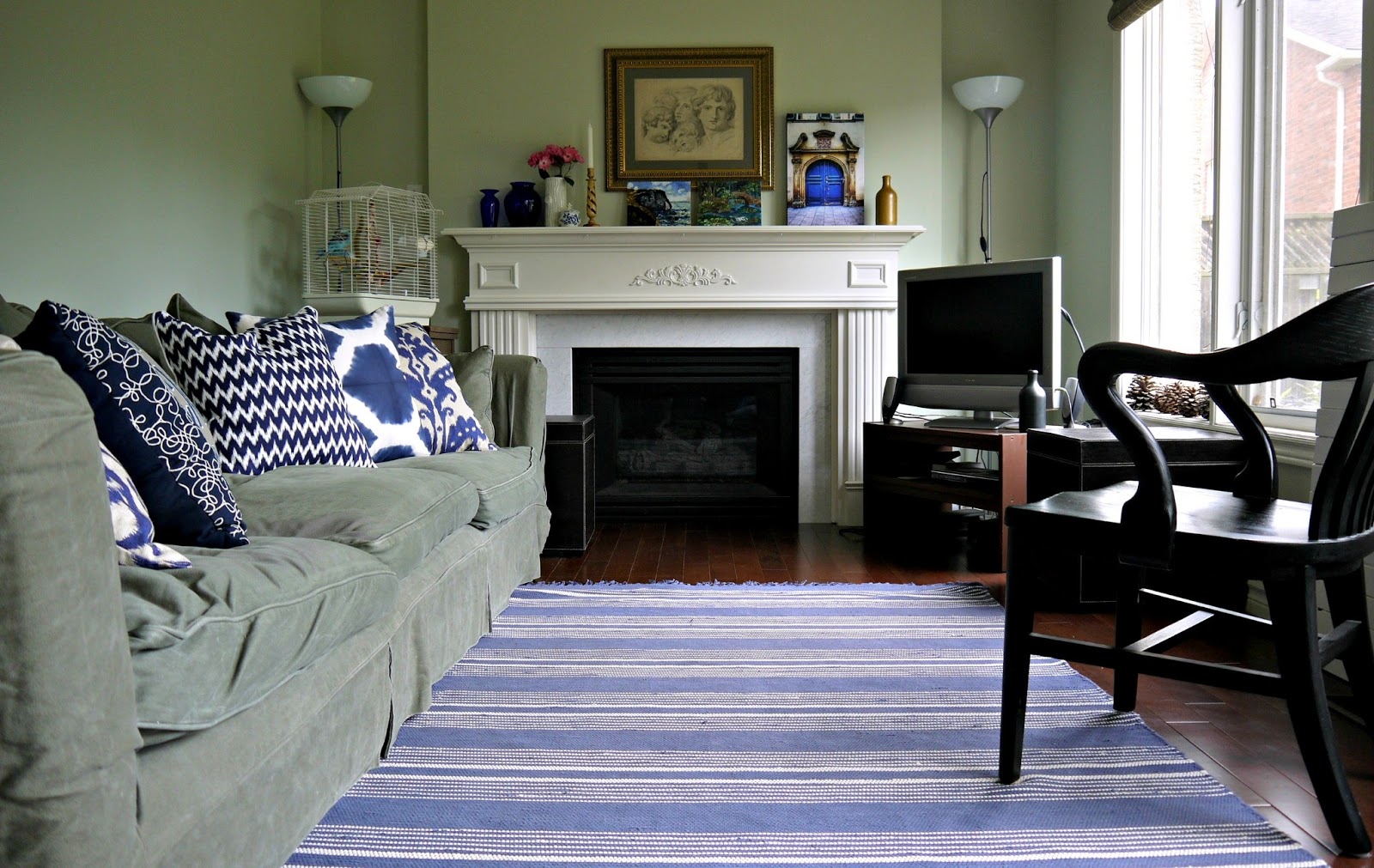
And I can't leave out the blues I recently introduced into our family room that mingle well with the soft greens (you can read about it here).


Isn't blue and green the perfect summer colour combination.

Friday, July 19, 2013

Char Kroeung from Cambodia


Our around-the-world-cooking adventure has taken on lightening speed as I want to finish before our youngest goes off to university in September.  We just finished Thailand and are now in Cambodia (virtually speaking, of course).  I like to post these recipes so I have an easy resource to find them again (love that search feature down the sidebar!), but I was pleased when Donna from An Anglo in Quebec commented that she actually makes some of the international recipes too. Yay, for inspiration!

After a bit of research into Cambodian cuisine we decided to make Char Kroeung.  Kroeung is a distinctive spice blend that is used in many dishes in Cambodia.  I based my recipe on this one, but had to make some changes as I was not able to get all the same ingredients (no kaffir lime leaves available at the local grocery store here in Ontario) and I had to take the spiciness down a notch.

Here's the recipe.

For the kroeung paste:
2 stalks lemongrass, outer leaves removed and thinly sliced
5 garlic cloves, coarsely chopped
1 large shallot, coarsely chopped
1 1/2 teaspoons ginger, peeled and coarsely chopped
1/2 teaspoon turmeric
1/2 teaspoon crushed chili peppers
1/2 cup water

For the stir-fry:
3 tablespoons vegetable oil
600 g beef or 600 g chicken (I used chicken), cut into bite-sized chunks
3 tablespoons fish sauce
2 tablespoons sugar
1/2 teaspoon salt
1 large onion, peeled and sliced into wedges
Oher vegetable (optional)
1 red bell pepper, sliced (bell pepper) 
1/2 cup roasted peanuts, ground

Method:
1.  Blend all the kroeung paste ingredients in a bowl until smooth (the recipe calls for mixing them in a blender.  Since we don't have one we did try the mortar and pestle, but I'm not sure it did much).
2.  Add the meat to the kroeung paste and mix well.
3.  Heat the oil in large wok over medium heat. Add meat, stirring well until browned.
4.  Add fish sauce, sugar and salt and stir until the sauce is bubbling.
5.  Add the onion wedges and cook for a few minutes.  Then add the other vegetables if using and cook a few minutes.
6.  Add the red bell pepper and 6 tablespoons of roasted peanuts. Stir for another minute, then remove from heat.

Sprinkle with remaining peanuts and serve with rice vermicelli noodles, lettuce (we used spinach), and bean sprouts. The recipe also called for fresh mint, but we don't care for mint so I omitted this.

We loved this dish.  I say that frequently, I know, but I will definitely be making it again so that confirms my Char Kroeung love.


P.S.  I've seen this written as Cha Kroeung and Char Kroeung and I'm not sure which is correct (they both have close to the same number of Google hits so that doesn't clear it up either).  If anyone has been to Cambodia and knows which way to spell it, I would love to find out.